
Disclaimer:
The authors are solely responsible for the content of this report. Material included herein does not represent the opinion of the European Community, and the European Community is not responsible for any use that might be made of it.
Back to overview TIDE tools
Dealing with uncertainties in environmental assessment studies
The uncertainties that one is confronted with when assessing the environmental impact of a project in an estuary are manifold. This tool gives recommendations to an estuarine manager on how to deal with the many uncertainties in a good way, respecting the European Nature Directives. The recommendations are the result of observed good practice. They are grouped per phase in the lifecycle of a project.Recommendations on dealing with uncertainties
Based on our findings we formulate below some recommendations on good practice and innovative solutions, especially regarding the way to deal with uncertainty and/or other research issues within national legislation, assessment procedures and decision-making. The recommendations are grouped per phase in the lifecycle of a project as defined in the blue part of the following scheme (Figure 10-1). The availability and quality of the information in each step can influence the following steps:
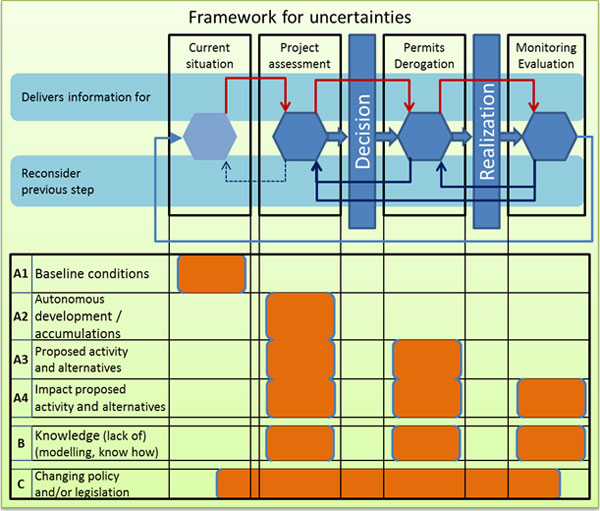
Figure 10 1 - Framework for dealing with uncertainties
However, also the preparatory work undertaken prior to the above indicated phases in the lifecycle of a project is of crucial importance to the attempt of avoiding uncertainties during the assessment and permitting phases. The more the conception of a project has been based on research and the more detailed (the scope and concept of) a project or plan is defined, the slimmer the chance of uncertainties arising in a later phase. During this preparatory work more specifically the proponent should try to prevent negative effects likely to be caused by this project. Eliminating negative effects upfront automatically results in the disappearance of the uncertainties inherently associated in predicting these negative effects. Negative effects should be avoided by choosing a project concept and implementation strategy that are based on sound eco-morphological insight in the estuarine system and that do not work against nature and the morphological evolution of the estuarine system. This approach has been followed in the widening and deepening of the Western Scheldt (e.g. the sediment disposal strategy along sandbars in the Western Scheldt).
Nevertheless, assessing the environmental impacts of port developments in estuaries can prove to be very challenging, due to the dynamic nature of the estuary and the uncertainty associated with cause and effect of development on the physical and biological environments. Consequently, the underlying idea for all these recommendations are the observations in the relevant literature that port authorities, regulators, EIA/SEA professionals and all other stakeholders in the process should accept the fact that EIAs and AAs (and, even more, SEAs, given their ‘strategic nature’) will always contain aspects that for several reasons could remain unexamined and unexplained and as a result need to be based on value assumptions instead.
1. Uncertainties concerning the current situation
The available scientific knowledge and past experiences are often crucial in gaining acceptability of a project.
2. Uncertainties concerning the project assessment
3. Uncertainties concerning permits and derogations
4. Uncertainties concerning monitoring and evaluation
1 See section 9.3. Dealing with uncertainties in the case studies
3 Consulting specialized governmental agencies (e.g. the EIA Unit in the Flemish Region, the Netherlands Commission for Environmental Assessment, …) allows proponents to inventory all already existing data for the impacted area or data that can easily be transposed to the project situation.
4 Port related activities, such as maintenance dredging, are sometimes necessary for the management of Natura 2000 sites and the achievement of the nature conservation goals, or at least carried out in the context of ecological site management. In such cases, no AA is required for, in this case, these dredging operations, provided they are expressly integrated into the management plan of the concerned site(s).
4 See the Western Scheldt case (presented in the report of Lot 2 and in Section 7.5.3 of this report) and also the Stour and Orwell case (presented in the report of Lot 2 and in Section 8.5.3 of this report) for a good illustration. 5 See the national sections “Dealing with uncertainties” – All the analysed EIA/SEA regulations require the proponent to communicate in the ES/ER on any difficulties, such as technical deficiencies or lack of knowledge encountered in compiling the required information. 6 The better the communication on uncertainties the less likely courts are inclined to intervene at the occasion of judicial review of a permit decision. See European and national case law sections on ‘marginal control’ and the notion of ‘reasonableness”. 7 The obligation to communicate effectively on uncertainties can also be deduced from the precautionary principle (see Section 4.2.3). 8 See the Weser case (presented in the report of Lot 2 and in Section 6.5.3 of this report): insufficiency of knowledge on protected migratory fish has been ‘resolved’ by consulting additional experts and organizing a work shop with several experts on this issue. 9 See the national sections “Dealing with uncertainties” – All the national EIA/SEA, AA and permitting practices allow for the implementation of adaptive strategies.
10 Example: a consent for dredging and land reclamation activities could impose stop/go thresholds to manage levels of suspended sediment acting as a proxy for ensuring that sediment inputs were as indicated in the ES and thus allowing the expectation that the impacts would be as predicted.
11 After performing a SEA and adopting the plan or program, implementing a monitoring scheme is not only good practice but also required by the SEA Directive (see Section 4.3.3.6).
12 See the Western Scheldt case presented in the report of Lot 2 and in Section 7.5.3 of this report.
13 See the Stour and Orwell case presented in the report of Lot 2 and in Section 8.5.3 of this report.
14 See the Stour and Orwell case presented in the report of Lot 2 and in Section 8.5.3 of this report.
15 See the Stour and Orwell case presented in the report of Lot 2 and in Section 8.5.3 of this report.
Based on our findings we formulate below some recommendations on good practice and innovative solutions, especially regarding the way to deal with uncertainty and/or other research issues within national legislation, assessment procedures and decision-making. The recommendations are grouped per phase in the lifecycle of a project as defined in the blue part of the following scheme (Figure 10-1). The availability and quality of the information in each step can influence the following steps:
Figure 10 1 - Framework for dealing with uncertainties
However, also the preparatory work undertaken prior to the above indicated phases in the lifecycle of a project is of crucial importance to the attempt of avoiding uncertainties during the assessment and permitting phases. The more the conception of a project has been based on research and the more detailed (the scope and concept of) a project or plan is defined, the slimmer the chance of uncertainties arising in a later phase. During this preparatory work more specifically the proponent should try to prevent negative effects likely to be caused by this project. Eliminating negative effects upfront automatically results in the disappearance of the uncertainties inherently associated in predicting these negative effects. Negative effects should be avoided by choosing a project concept and implementation strategy that are based on sound eco-morphological insight in the estuarine system and that do not work against nature and the morphological evolution of the estuarine system. This approach has been followed in the widening and deepening of the Western Scheldt (e.g. the sediment disposal strategy along sandbars in the Western Scheldt).
Nevertheless, assessing the environmental impacts of port developments in estuaries can prove to be very challenging, due to the dynamic nature of the estuary and the uncertainty associated with cause and effect of development on the physical and biological environments. Consequently, the underlying idea for all these recommendations are the observations in the relevant literature that port authorities, regulators, EIA/SEA professionals and all other stakeholders in the process should accept the fact that EIAs and AAs (and, even more, SEAs, given their ‘strategic nature’) will always contain aspects that for several reasons could remain unexamined and unexplained and as a result need to be based on value assumptions instead.
1. Uncertainties concerning the current situation
The available scientific knowledge and past experiences are often crucial in gaining acceptability of a project.
- Detailed investigation of the physical processes and morphological evolution of the specific estuaries, preferably in close collaboration with the national or federal government, in connexion with the research obligations pursuant to the Birds and Habitats Directives. 1,2 This investigation should lead to a clear scientific view on the current situation and the baseline conditions that are to be used in assessing new plans and projects.
- The best available and most sound scientific knowledge regarding these components should also be established and used by the competent authorities and ports as a basis for the establishment of nature conservation objectives for such ecosystems. 3 When and if uncertainties or lack of knowledge on physical, morphological or biological processes still exist, these should be minimized as much as possible by additional research.
- As the acceptance of certain mitigation techniques for subsequent developments is critical in gaining approval for projects, ports and competent authorities should collaborate in establishing a more systematic approach towards monitoring, so that new evidence about previous mitigation measures can be fed back into the scientific knowledge system and – if necessary – also be used for refining numerical models.
- The ultimate standard for determining whether an effect on a Natura 2000 site caused by a project or a plan will be significant or not, is its relation to the nature conservation objectives adopted for the site. Therefore, port and waterway authorities should be consulted early on the development and implementation of conservation measures for relevant Natura 2000 sites. In the management plan of these sites, economic, social and cultural requirements and regional and local characteristics such as the actual situation in ports and the expected future economic developments, should be taken into account with the simultaneous aim of not jeopardizing the contribution of the respective site to achieving the overall objective and coherence of the Natura 2000 network.
2. Uncertainties concerning the project assessment
- In this phase developer and consenting authorities should communicate extensively and consistently with all stakeholders on the scope and the effects of the plan or project, the assessment principles and process and on the (remaining) uncertainties. This should go further than what the EU Directives and national regulations require (e.g. public enquiries, scoping procedures, etc.). Good stakeholder management is often crucial to a smooth implementation of the project.4
- Authors of EIAs, SEAs and AAs should carefully consider how and where to convey the information concerning uncertainty issues in their reports. 5,6,7 Information should be progressively disclosed depending on its relevance to target audiences. Crucial information on how the report deals with uncertainties should be openly revealed in the textual parts, preferably not in appendices.
- In reporting on the environmental assessment or AA, the author will have to characterise the environment and put it into context with respect to its ‘value’ and its vulnerability to the relevant impacts. The EIA/SEA professionals are required to identify, label, weigh and rank uncertainties. For each individual uncertainty the report should indicate whether it is policy relevant or not. This can be done in a separate risk assessment memo, containing a synthetic risk matrix.
- The EIA, SEA or AA documentation should undergo an independent review in order to control the quality and adequacy of the information prior to the decision being made. 8
3. Uncertainties concerning permits and derogations
- In case of any remaining (minor) scientific uncertainty with regard to the effects of a plan or project or the related mitigation or compensatory measures, the consenting authority always has the possibility to grant its consent under special conditions (integrated in the consent decision itself).
- These conditions could impose an adaptive strategy.9 Such a strategy may result in a phasing in time of the proposed project or the duty to work with a pilot project. In this phasing process, sequencing could be integrated that only allows the following phase to start after meeting certain goals or conditions. 10
- Such special conditions should also include a pre-defined and validated scheme to monitor the actual impacts as well as a framework to adapt the mitigation and compensation measures regarding the actual impacts. Monitoring schemes 11 should be established to monitor short and long term evolution, such as morphological dynamics and sediment circulation/re-distribution.
- The EIA/SEA and AA can be helpful in setting up such an adaptive strategy, by following the next steps: 12
- Determination of the bandwidth of effects, fixed uncertainty margins or calculation of a favourable and an unfavourable scenario;
- Questioning: What is the probability of the impact scenarios (especially the worst-case scenario)? What is the probability that the best or worst-case scenario is occurring? This insight into the reality of the scenario can help the authorities in the decision-making process;
- Determination of the importance of the uncertainties for the comparison of alternatives. This is relatively straightforward by comparing similar alternatives which will have usually similar effects, but a statistical test may be needed to compare dissimilar alternatives to determine whether or not alternatives significantly differ from each other;
- Determination of the probability of exceeding limits. In statistics the true value often lies somewhere in the interval of the calculated value plus or minus half of the uncertainty margin. On this basis, the probability of exceeding the limits can be estimated.
- Keep measures on hand. These measures, and when and by whom they are to be conducted, must be determined in advance. It is important to establish which measures are conceivable, what effects they may have, how the actual effects are monitored, based on which criteria, when and in what order the measures will be taken and who is responsible for funding and implementation.
- Determination of the bandwidth of effects, fixed uncertainty margins or calculation of a favourable and an unfavourable scenario;
- An adaptive strategy requires also the implementation of a long term forum with stakeholders for reporting results or any other vigorous follow-up mechanism (e.g. a combination of competent public bodies) that is authorised to implement changes to a programme of mitigation or compensation and to take additional (predetermined) compensatory measures on the basis of the results of monitoring programmes. 13
- In order to achieve this, financial warranties or any other financial safeguards should be put in place that can guarantee long-term implementation and protection.
- The special conditions imposing an adaptive strategy could be accompanied by one or more separate legal agreements committing an applicant to take corrective measures, following certain timescales or in the event that mitigation and/or compensation measures do not meet the objectives set, stop the project.
4. Uncertainties concerning monitoring and evaluation
- An adaptive strategy is also useful in order to overcome knowledge gaps. Instead of extensive research prior to the consent, the estuarine situation can also be monitored in a later stage. New evidence and current scientific information should then be fed back into the management plan and into assessments for new projects or plans.
- As soon as the monitoring data reveals deterioration of the estuarine environment, a set of (predetermined) measures is applied in order to adapt mitigation and compensation measures regarding to the actual impacts. Moreover, on the basis of trends measured during the monitoring, the conservation objectives and management measures may be revisited where and whenever necessary. 15
1 See section 9.3. Dealing with uncertainties in the case studies
3 Consulting specialized governmental agencies (e.g. the EIA Unit in the Flemish Region, the Netherlands Commission for Environmental Assessment, …) allows proponents to inventory all already existing data for the impacted area or data that can easily be transposed to the project situation.
4 Port related activities, such as maintenance dredging, are sometimes necessary for the management of Natura 2000 sites and the achievement of the nature conservation goals, or at least carried out in the context of ecological site management. In such cases, no AA is required for, in this case, these dredging operations, provided they are expressly integrated into the management plan of the concerned site(s).
4 See the Western Scheldt case (presented in the report of Lot 2 and in Section 7.5.3 of this report) and also the Stour and Orwell case (presented in the report of Lot 2 and in Section 8.5.3 of this report) for a good illustration. 5 See the national sections “Dealing with uncertainties” – All the analysed EIA/SEA regulations require the proponent to communicate in the ES/ER on any difficulties, such as technical deficiencies or lack of knowledge encountered in compiling the required information. 6 The better the communication on uncertainties the less likely courts are inclined to intervene at the occasion of judicial review of a permit decision. See European and national case law sections on ‘marginal control’ and the notion of ‘reasonableness”. 7 The obligation to communicate effectively on uncertainties can also be deduced from the precautionary principle (see Section 4.2.3). 8 See the Weser case (presented in the report of Lot 2 and in Section 6.5.3 of this report): insufficiency of knowledge on protected migratory fish has been ‘resolved’ by consulting additional experts and organizing a work shop with several experts on this issue. 9 See the national sections “Dealing with uncertainties” – All the national EIA/SEA, AA and permitting practices allow for the implementation of adaptive strategies.
10 Example: a consent for dredging and land reclamation activities could impose stop/go thresholds to manage levels of suspended sediment acting as a proxy for ensuring that sediment inputs were as indicated in the ES and thus allowing the expectation that the impacts would be as predicted.
11 After performing a SEA and adopting the plan or program, implementing a monitoring scheme is not only good practice but also required by the SEA Directive (see Section 4.3.3.6).
12 See the Western Scheldt case presented in the report of Lot 2 and in Section 7.5.3 of this report.
13 See the Stour and Orwell case presented in the report of Lot 2 and in Section 8.5.3 of this report.
14 See the Stour and Orwell case presented in the report of Lot 2 and in Section 8.5.3 of this report.
15 See the Stour and Orwell case presented in the report of Lot 2 and in Section 8.5.3 of this report.